
the kitchen
〰️
the kitchen 〰️
the kitchen
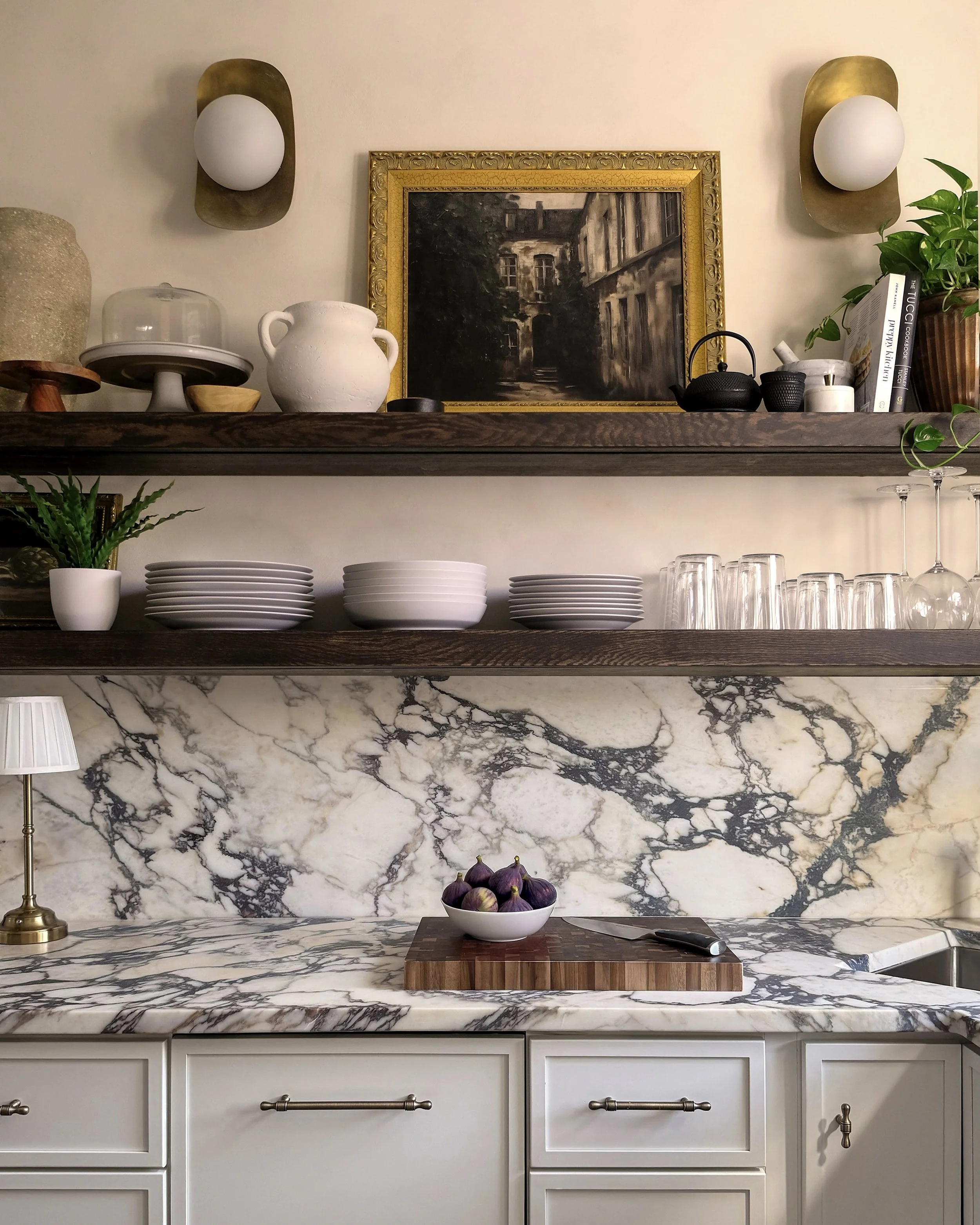
For two years, I moved through this kitchen rather than actually living in it. Cold, clinical, and deeply beige in its energy. One Calacatta Monet slab, a walnut shelf situation, and an embarrassing amount of brass later, it finally feels like mine.
Familiar. Collected. European.
A European Kitchen in a Chicago Condo
For two years, I avoided my own kitchen.
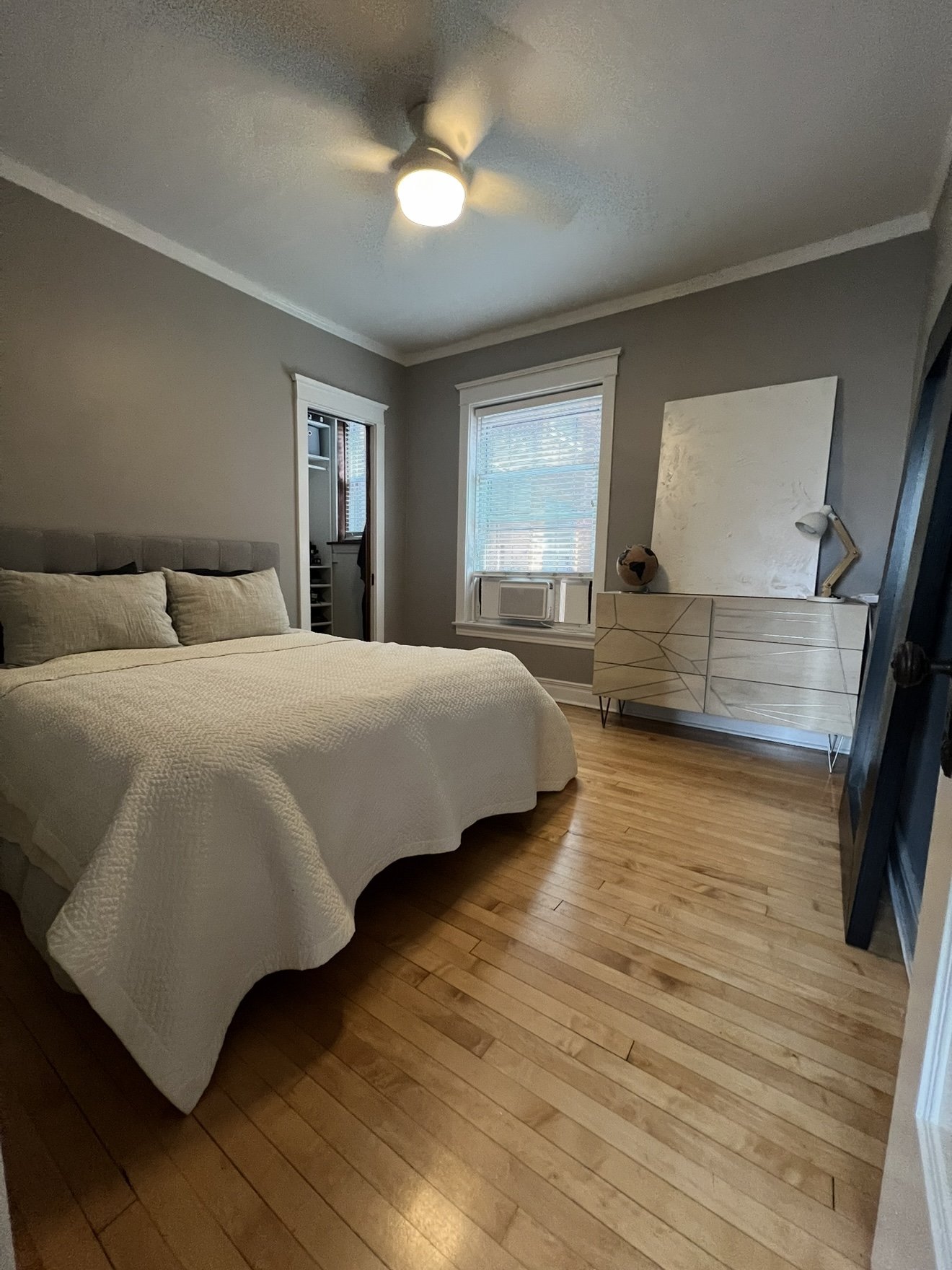
Not consciously. I just never found a reason to be in it. Cool grey walls, bright white cabinets, white appliances blending into one another. Perfectly fine, but deeply soulless. The kind of space that functions without ever actually feeling like anything.
I kept telling myself I’d deal with it later. This condo isn’t my forever home, so why invest? And then one day I just … stopped believing that logic. I didn’t want to finally renovate as I was packing boxes. I wanted to live in it.
Three words guided everything: Familiar. Collected. European.
The Marble That Set the Tone
The kitchen lives and dies by the Calacatta Monet.
Dramatic yellow, green, wine, and dark charcoal veining through creamy stone. The moment I saw it, I knew. I also knew it was impractical and way too expensive, so I selected a more practical marble.
When that slab broke at the fabricator, it felt like a sign. Nothing comparable existed in my budget. So I did what I probably always knew I was going to do and went back to the slab I’d loved from day one. It costs more than it should.
It was also the decision that defined the entire room.
I had it honed instead of polished. Honed marble feels velvety and historic. In the late afternoon when the sun pours through the window, the veining deepens and the whole thing starts to glow. It feels less like a countertop and more like art.
Collected. Like it’s always belonged here.
European Restraint, Chicago Soul
I didn’t want to erase the condo’s bones, I wanted to work with them.
I added a brick veneer wall that nods to classic Chicago architecture, then layered in the European details: a custom curved plaster range hood, oversized antique brass hardware, brass and milky glass sconces, a stainless gas range that feels professional without trying too hard. The moody mineral-washed walls replaced the cold grey and suddenly the whole room felt warmer and lived-in.
The massive dark walnut open shelving was designed and fabricated by Julius Dorsey (yes, the guy from Windy City Rehab). The depth of the walnut tempers the drama of the Monet. Together they feel confident without being too loud. A classic nickel Kohler faucet introduces a quieter note against all the brass.
The refrigerator and freezer are compact by American standards and concealed behind walnut panels. Guests always notice two things: the marble and the fridge.
“It’s tiny,” they say.
Exactly.
The Practical Stuff
For two years, I didn’t own a proper trash can. Garbage bags hung from the back door … I am not proud of this period of my life, lol
Now there’s a seamless pull-out trash and recycling cabinet hidden in the millwork. Not glamorous, but genuinely life-changing for me.
There’s also a sliding door that opens to a large pantry. Storage feels intentional now. Hosting feels easier. I even picked up an oversized warming panel that stretches nearly the full length of one countertop so I can actually keep food warm when people come over. The kitchen was designed to be admired, but it needed to function too.
The Regret
I kept the original ceramic floor tiles. Technically nothing was wrong with them. I hated the stark black and white, but I told myself I’d paint them eventually.
After replacing literally everything else in the kitchen, those tiles became a relic. A reminder of what the room used to be. I should have pulled them from day one.
That’s on me.
(But I’m fixing it)
Light as a Material
Mornings are soft. Quiet light across honed stone. Evenings are something else entirely. The Monet deepens, the brass warms, the brick glows, the mineral-washed walls take on dimension. It gets a little cinematic in there without even trying. I feel like I’m transported to Tuscany … cooking for Diane Lane in Under the Tuscan Sun.
The Part I Actually Care About
The most meaningful change isn’t aesthetic. It’s behavioral.
I cook more. I host more. I linger.
Guests comment on the marble. They’re surprised by the little refrigerator. They run their hands across the walnut shelves. (Pemberton is unimpressed unless food is actively hitting the floor.)
The kitchen is no longer a room I feel forced to use for making meals. It’s where I want to be.
Patience as Process
I started in March. Cabinets, countertops, and plumbing were in by May. The rest unfolded slowly over the next six or seven months … which turned out to be a good thing even when it didn’t feel like one. Living in the in-between phases meant I could adjust based on how I actually used the space instead of how I imagined I would.
If I could do it again, I’d hire a contractor from the start. I told myself I was saving money by coordinating trades independently. I probably was not.
Familiar. Collected. European.
The Calacatta Monet brings the drama. The walnut brings the depth. The brick brings the context … and the brass brings the warmth.
It feels like Chicago and it feels like Europe and most importantly, it finally feels like me.
For the first time since I moved in, I don’t avoid my kitchen.
I linger.
before

after


